
KOKO Plastic Surgery · Rhinoplasty
Rhinoplasty with Rib Cartilage
Height and length built from your own rib cartilage
Rib cartilage rhinoplasty uses cartilage from your own ribs to raise or lengthen your nose. It is also used to treat a contracted nose, where the nose has shrunk after a previous surgery.
Rib cartilage can be harvested in ample amounts and gives strong support. At KOKO Plastic Surgery, we draw on long experience and skill to shape it carefully to fit your nose.
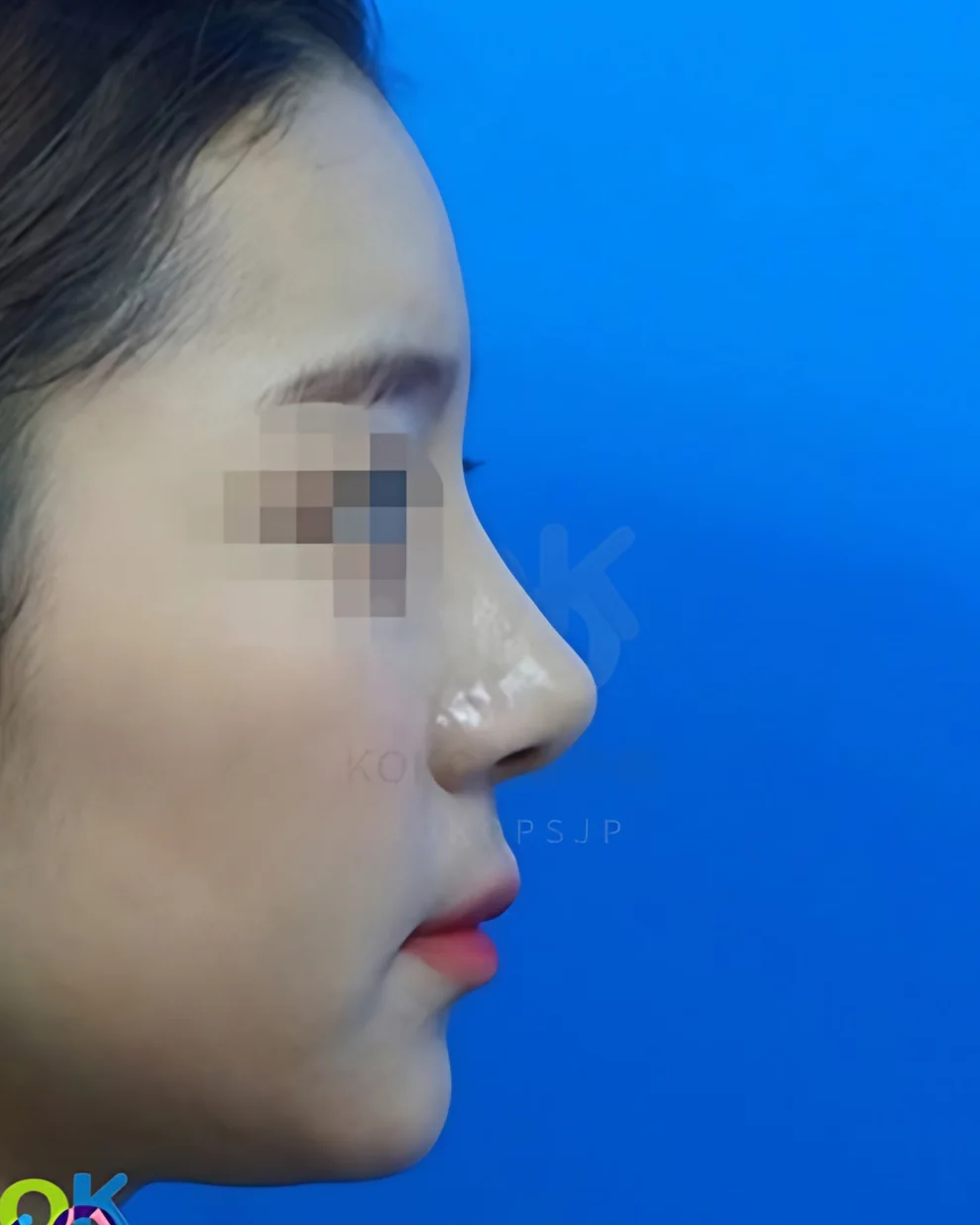
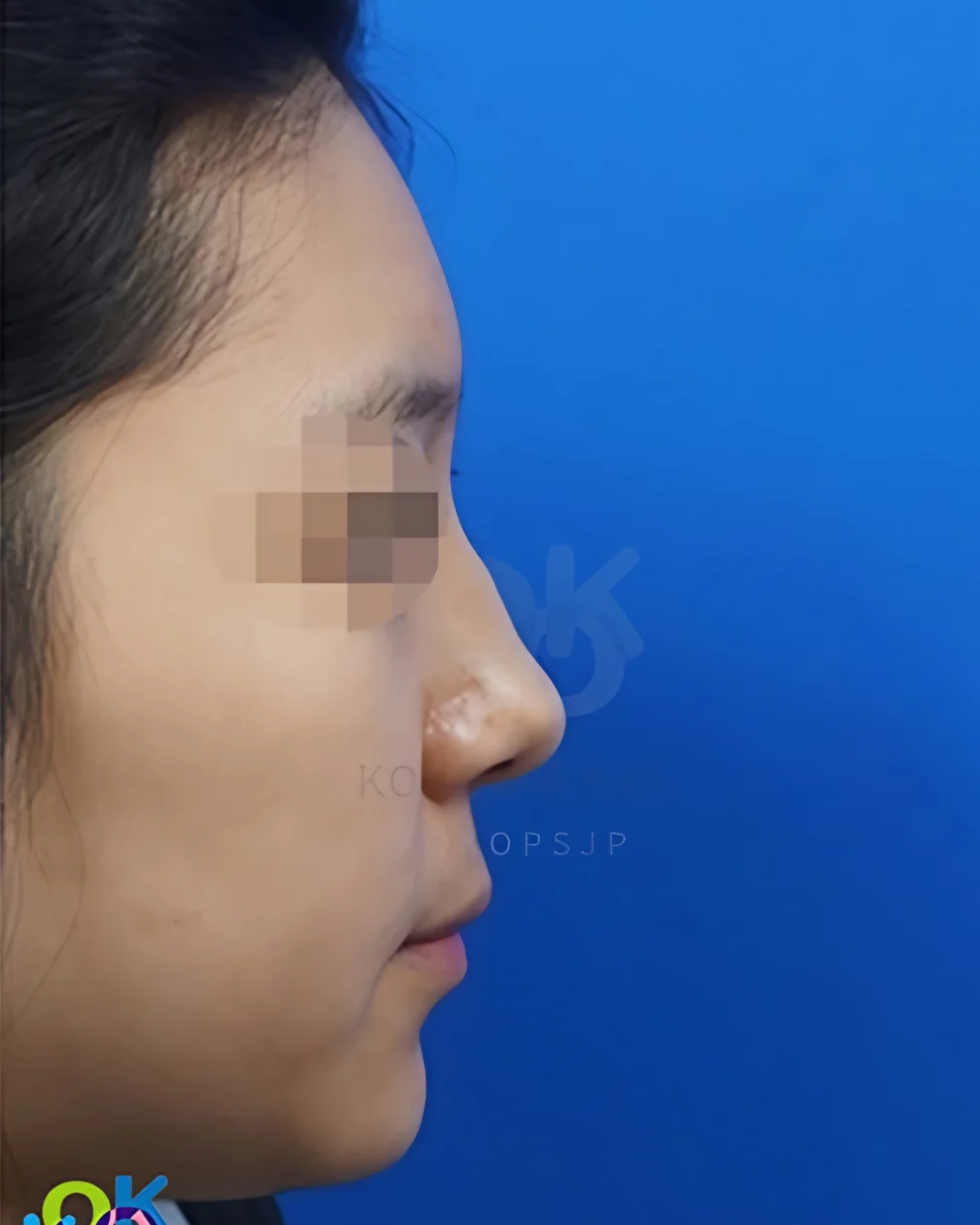
Rhinoplasty with your own rib cartilageSide · Photographed at our clinic
- Surgery time
- 2–3 hours
- Anesthesia
- Sedation or general anesthesia
- Hospital stay
- Not needed
- Stitch removal
- After 4–10 days
- Recovery
- About 7 days
Who it is for
- You are worried about implant side effects, or would rather not have an implant
- You want your nose shaped with your own tissue
- Your nose has shrunk and hardened after rhinoplasty (a contracted nose)
- Your tip turns up so your nostrils show from the front (an upturned nose)
- You do not have enough septal cartilage for tip surgery
What is rib cartilage rhinoplasty?
Each rib is made of bone and cartilage. The cartilage part is called rib cartilage. Rib cartilage rhinoplasty uses it as the material for your nose.
Rib cartilage is more plentiful than other cartilage, so enough can be harvested to match the height and length you want.
It is also used when a revision is needed, or when ear or septal cartilage has already been used and none is left.
What is a contracted nose?
In a contracted nose, scar tissue forms inside the nose, hardens and shrinks. The tip may turn up or the nose may get shorter, or the implant may be squeezed and the nose distorted.
It happens when inflammation after nose surgery is left untreated early on, or after repeated nose surgeries. It is one of the more serious complications of rhinoplasty, and relatively difficult to treat.
We use rib cartilage for noses that became inflamed after several surgeries, were shortened by contracture, or have a collapsed tip. Because enough of it can be harvested, we can rebuild the length and height of the nose.
What rib cartilage offers
As a material for the nose, rib cartilage has these qualities:
- There is plenty of it, so enough can be harvested for what your nose needs
- It is your own tissue, so it feels less foreign and is less prone to inflammation
- It is not easily absorbed by the body and gives strong support, which makes a well-projected tip easier to create
- It is firm, which helps your nose hold its shape over time
- It is versatile enough to be used in reconstructive surgery as well
How the surgery is done
We make an incision of about 3 cm along the crease under your chest. We then harvest cartilage from the 6th or 7th rib, sized to suit your nose.
The shape of your chest rarely changes where the cartilage was taken. The incision scar fades over about 6–12 months.
We carefully design the harvested cartilage to fit the shape of your nose before using it.
Even within rhinoplasty, surgery with rib cartilage calls for fine technique and know-how. We recommend consulting an experienced specialist.
How much the scar fades and how you recover vary from person to person.
Risks and side effects
Results and recovery vary from person to person. The main risks and side effects are:
- Swelling and bruising after surgery
- Infection or inflammation
- Asymmetry, or a result that differs from what you pictured
- An implant shifting, showing through or becoming exposed (when an implant is used)
- Pain or a scar where rib cartilage was taken (when rib cartilage is used)
- Contracture (tissue hardens and the nose shrinks)
If anything concerns you, you can still reach us on WhatsApp after you fly home.
When rib cartilage is used
A shrunken or collapsed nose, rebuilt with rib cartilage
These are typical problems after a previous surgery where we use rib cartilage. In the diagrams, the pink line marks the problem area and the dotted gray line shows the target line.
Rib cartilage in revision surgery
When contracture has shortened the nose
Tissue inside the nose has hardened and shrunk, turning the tip up or shortening the nose.
We rebuild the length and height of the nose with rib cartilage, which can be harvested in ample amounts.
Revision RhinoplastyWhen inflammation has developed
If your nose has become inflamed after several surgeries, we first treat the inflammation. We then remove the implant.
We rebuild the nose with rib cartilage in place of the implant. Because it comes from your own body, rejection is less likely.
When the tip has collapsed
If your previous surgery did not build enough support for the tip, the tip gradually collapses over time.
We rebuild the tip with rib cartilage, which gives strong support.
Nose Tip Surgery
WHY KOKO
Why patients choose KOKO for Rhinoplasty with Rib Cartilage
- 01
Long experience with the nose
KOKO Plastic Surgery opened in 2001 as the first clinic in Apgujeong specializing in nose surgery. We have performed nose surgery for 25 years, and that experience guides our rib cartilage work, which calls for fine technique.
- 02
Designed for your nose
We carefully design the harvested rib cartilage for each nose, aiming for a natural, attractive shape.
- 03
Built to hold its shape
Rib cartilage is firm and helps the nose keep its shape over time. We use that support to build your nose.
- 04
Dr. Cho, from consultation to surgery
Dr. Cho Bae-jung, our representative director and a board-certified plastic surgeon, handles your consultation and performs your surgery himself.
Cases
Rhinoplasty with Rib Cartilage before and after
Eyes are blurred for privacy. Tap a photo to enlarge it, then slide to compare before and after.
Our doctor’s promise
We choose your materials before surgery and explain them
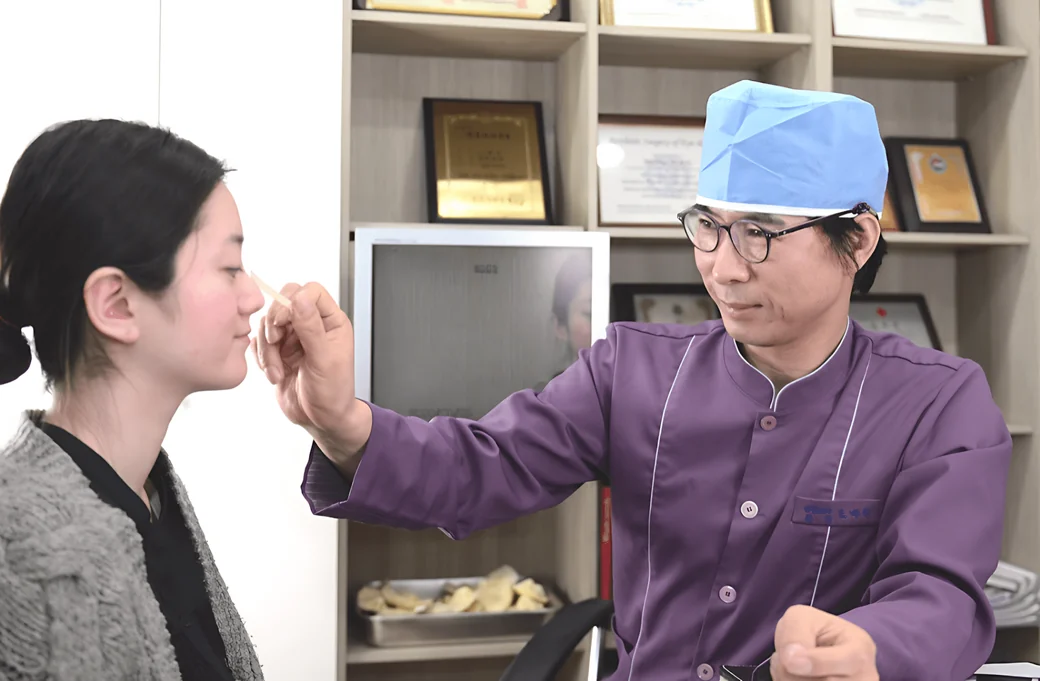
At your consultation, Dr. Cho chooses the materials based on your nose and the shape you want, and explains why. If something unexpected is found during surgery, he tells you about it himself afterward.
We never use a material we have not proposed to you without your consent.
After surgery, we walk you through each step, showing you video and photos taken during the operation.
- Opened the first nose surgery clinic in Apgujeong
- Full member of the Korean Society for Aesthetic Plastic Surgery, the International Society of Aesthetic Plastic Surgery, the Korean Society of Aesthetic Rhinoplasty and others
How long to stay
For rib cartilage rhinoplasty, stay until your stitches are out
Stitches come out 4–10 days after surgery, depending on the technique and your nose. You can fly home once they are out. We plan your schedule together at your consultation.
-
Day 1
Visit and consultation
An exam with Dr. Cho and a CT scan. We check your nose and decide on the technique and materials. A medical interpreter joins you.
-
Surgery day
Surgery
2–3 hours under sedation or general anesthesia. No hospital stay.
-
Following days
Follow-up checks
Wound care and swelling checks. You come in from where you are staying.
-
Days 4–10
Stitch removal
We remove the stitches and check your splint. The day depends on the technique.
-
Flying home
Surgery certificate
We prepare the documents you need to leave Korea. You can still reach us on WhatsApp after you fly home.
- Medical interpreterA professional medical interpreter joins your consultation and surgery
- Airport transferOne-way or round-trip, depending on your surgery fee
- AccommodationA guesthouse is provided. You can switch to a hotel
- Service details
FAQ
Common questions about Rhinoplasty with Rib Cartilage
-
We make an incision of about 3 cm along the crease under your chest. The scar fades over about 6–12 months, though how much it fades varies from person to person.
-
A contracted nose is relatively difficult to treat, but we do perform surgery that rebuilds its length and height with rib cartilage. If there is inflammation, we treat it first and operate afterward.
-
Yes. Rib cartilage is used when ear or septal cartilage has already been used and none is left. There is plenty of rib cartilage, so enough can be harvested for what you need.
-
Rib cartilage rhinoplasty is done under sedation or general anesthesia. We explain which one suits your surgery at your consultation. No hospital stay is needed.
-
Stitches come out 4–10 days after surgery, and you can fly home once they are out. The day depends on the technique and your nose, so we plan your schedule together at your consultation.
-
It varies widely with the extent of surgery, the materials used and whether you have had surgery before. Send three photos of your face — front, side and 45° — on WhatsApp (+82 10-9608-0042), along with your surgical history. We will give you an estimate, and we can also go over it in an online consultation.
How to start
Getting started is easy.
Book a consultation online, or send us your questions on WhatsApp. We will reply in English.
- Book online
Choose a date and time that suits you for your consultation.
- Ask on WhatsApp
A short question is enough to start.
- Photos are optional
Front, side and 45° photos help us give you a more specific cost estimate.

Scan with your phone to open a WhatsApp chat with us (+82 10-9608-0042).