Unveiling Actual Surgical Materials: The Safe and Certain Answer to Revision Rhinoplasty
KOKO Plastic Surgery,
the first cosmetic surgery clinic specializing in nasal
procedures in Apgujeong, has opened its doors.
With 25years of surgical experience and expertise,
I am Dr. Jo Bae-jung from KOKO Plastic Surgery,
providing effective face slimming injection treatments.
The Core of Flawless Revision Rhinoplasty: Septal Reconstruction
The Principle of Rebuilding the Broken Pillar
When the internal nasal axis (septum) collapses due to repeated rhinoplasty or inflammation (contracture), the nasal tip can become severely upturned or sunken. For a successful revision rhinoplasty, simply placing an implant to change the exterior is not enough. Rebuilding the internal framework—the septum—firmly back to its original position is the absolute priority. A true Korean rhinoplasty master considers this foundation work the key to success.
Why is Autologous Rib Cartilage Essential?
To robustly rebuild the septum, a surgical material with powerful supportive strength is required. Autologous rib cartilage (chest cartilage) provides the most abundant and sturdy cartilage in our bodies, making it excellent for perfectly reconstructing a collapsed nasal pillar. Because it is 100% your own tissue, the risk of rejection or side effects is extremely low, making it a core material for safe and reliable Korean rhinoplasty.
Analysis of Actual Surgical Materials and Before/After Photos
Autologous Rib Cartilage
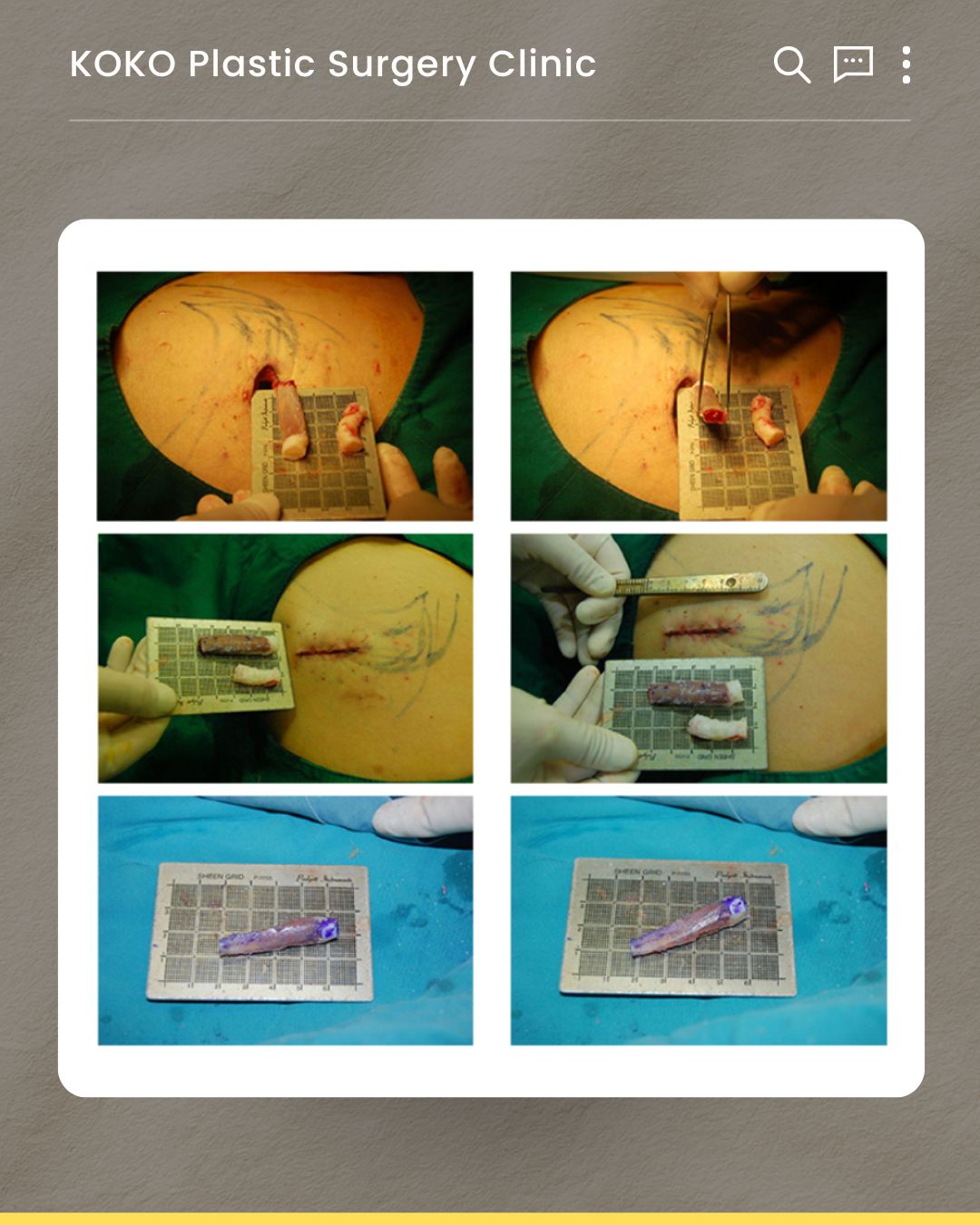
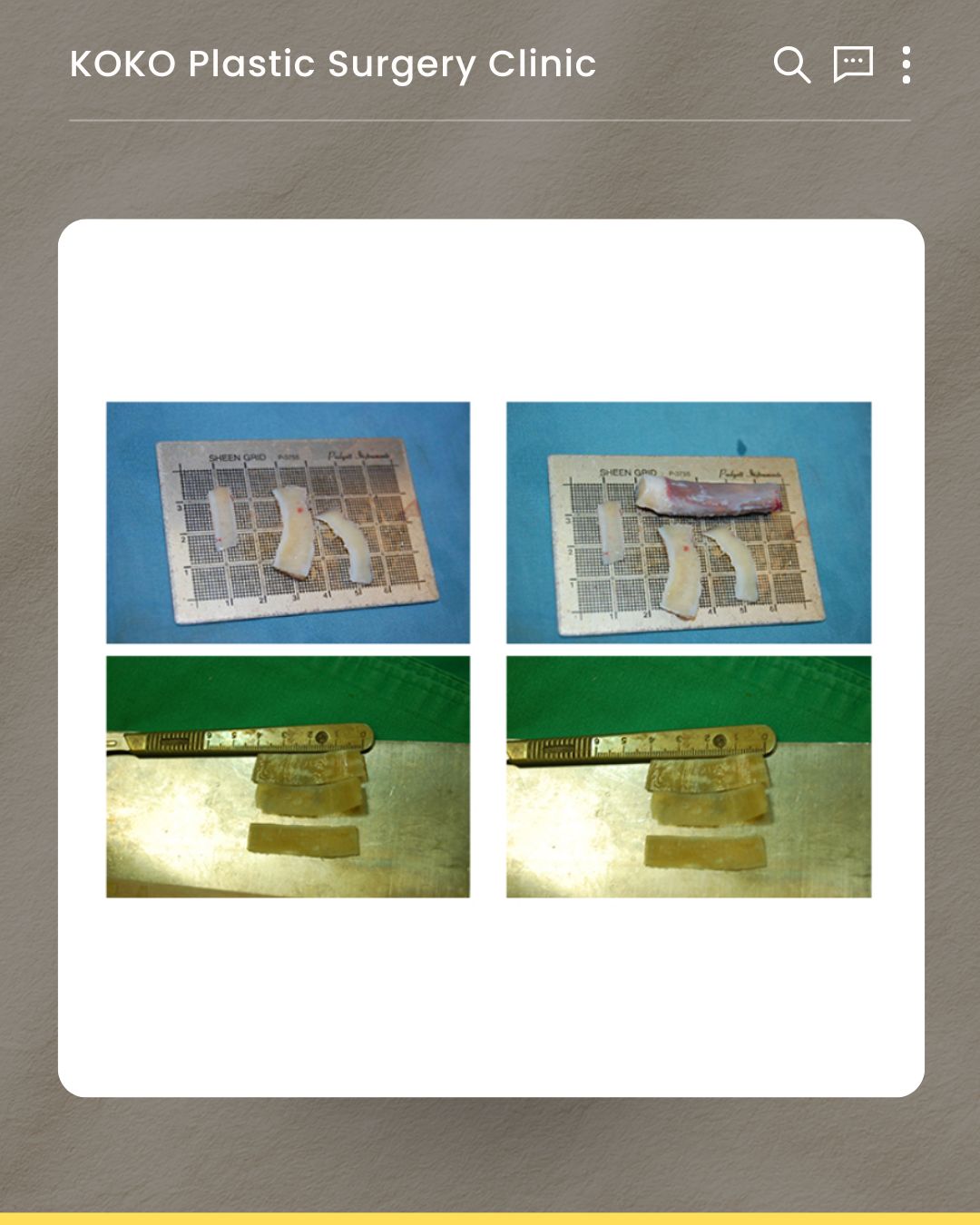
Harvesting and Sculpting Process (Actual Photos) As seen in our released surgical photos, the autologous rib cartilage harvested from the patient is meticulously sculpted on a special Sheen Grid without even a 1mm margin of error. Carving the cartilage to perfectly match each patient’s nasal structure and required support demands extreme concentration and the seasoned anatomical expertise of a Korean rhinoplasty master.
Dramatic Change: Actual Before & After Review
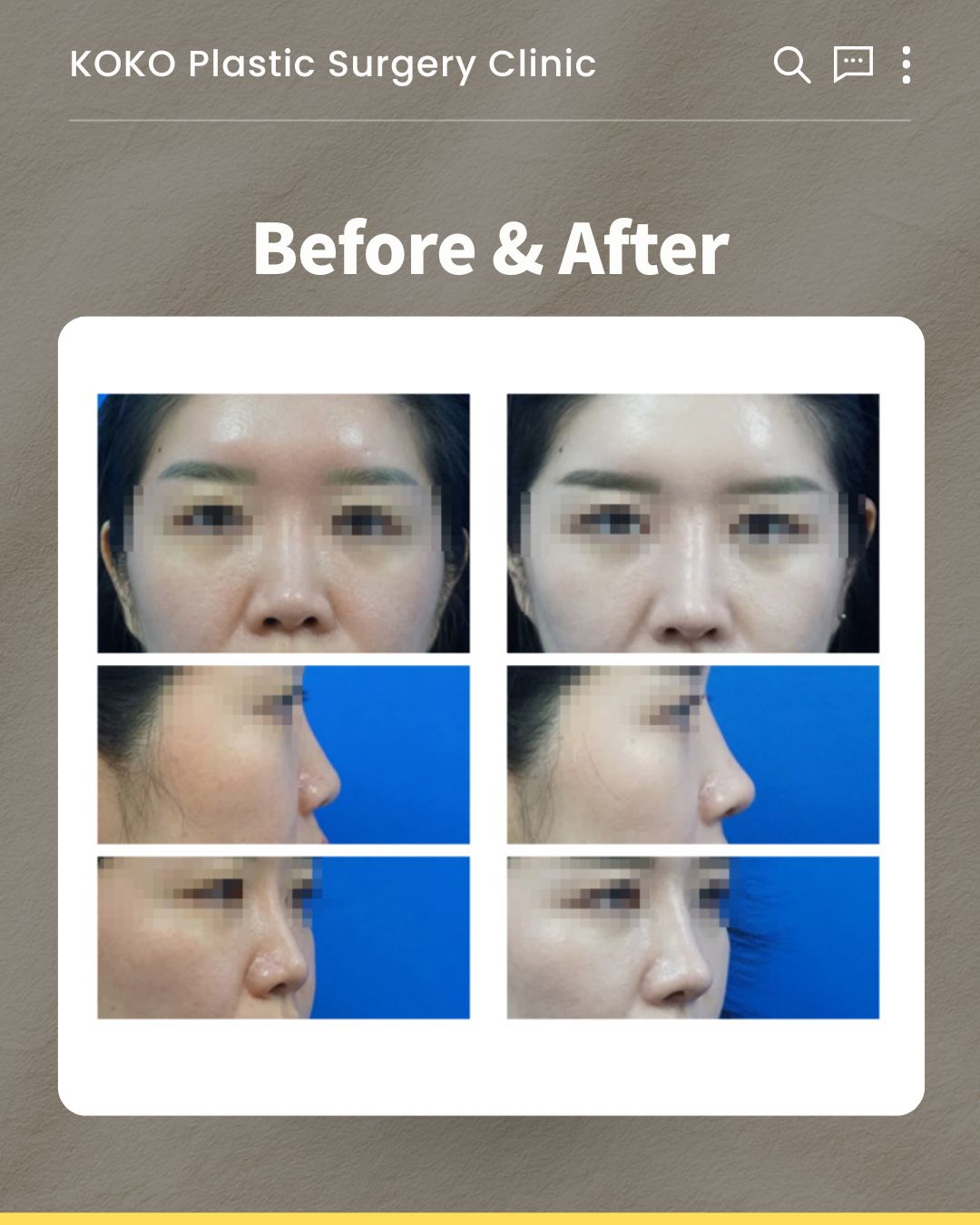
Comparing the before and after photos of patients who underwent septal reconstruction reveals a clear difference in skill. A nasal tip that was severely upturned and shortened due to previous rhinoplasty side effects and contracture is naturally and elegantly extended to fit facial proportions post-surgery. This sturdy, non-artificial dimensionality is proof of the high-level expertise found in Korean plastic surgery.
KOKO Plastic Surgery’s Differentiating Korean Plastic Surgery Expertise
1:1 Customized Precision Cartilage
Sculpting Technology Based on vast clinical experience, we possess exclusive know-how to smoothly and naturally sculpt hard rib cartilage according to the skin tension and desired shape of the patient’s nasal tip. This thoroughly prevents post-surgical unnatural stiffness or warping, ensuring ideal rhinoplasty results.
Infection-Free, Thorough Safety System
To give peace of mind to clients visiting for Korean plastic surgery from overseas, every step from material harvesting to processing and insertion is conducted under a strict sterile infection control system. By prioritizing safe autologous tissue over artificial implants, we completely eradicate the root cause of recurring inflammation in revision rhinoplasty.
Autologous Rib Cartilage Korean Rhinoplasty FAQ
Will it leave a large scar on my chest?
Harvesting is done via a minimal 2~3cm incision along the breast crease. Applying exquisite micro-suturing techniques, the scar fades into a faint line over time and is barely noticeable.
What is the recovery time and stay schedule for overseas patients?
Typically, stitches are removed around 7 days post-surgery, after which light daily activities and flights are possible. For overseas clients, a 7~10 day stay in Korea allows for safe treatment, progress checks, and return.
WhatsApp] +82 10-9608-0042
👃 See More Koko Before & After Photos
/language/en/