


Traveling to Seoul for cosmetic surgery requires more than choosing a procedure. For Japanese patients, safe planning includes a realistic recovery schedule, clear communication, and an aftercare plan for the period after returning home.
Your stay should allow for surgery, early monitoring, suture removal when applicable, and your surgeon’s assessment before travel.
An online consultation is useful, but procedure suitability and the final surgical plan require an in-person examination.
Confirm remote follow-up options and know when symptoms require prompt in-person assessment in Japan.
What You Should Know Before Traveling to Korea for Cosmetic Surgery
Each year, more Japanese people consider traveling to Seoul for cosmetic surgery. Korea is recognized for high standards in aesthetic medicine, and Seoul has specialist clinics with extensive experience, particularly in rhinoplasty and eyelid procedures.
The availability of Japanese-language support at a growing number of clinics has reduced the language barrier. However, concerns about having surgery abroad remain understandable: communication, unexpected problems, and aftercare after returning home should all be considered before travel.
A safe decision is not based on travel convenience alone. It depends on whether the procedure, recovery schedule, communication plan, and follow-up arrangements are appropriate for your individual situation.
This guide provides general information only and is not medical diagnosis or an individual treatment recommendation. A qualified physician must confirm procedure suitability and specific treatment decisions through an online or in-person consultation.
Planning Your Trip: Timing, Costs, and Preparation
How Long Do You Need to Stay?
The required length of stay depends significantly on the procedure. For a standard primary rhinoplasty, including implant placement or cartilage grafting, a minimum stay of around seven days is generally expected, from arrival the day before surgery through suture removal and a post-operative check.
This is only an estimate. Swelling and recovery progress vary considerably, and your surgeon’s instructions always take priority. Revision surgery or reconstructive procedures using autologous rib cartilage may require a longer stay.
| Planning area | What to consider | Why it matters |
|---|---|---|
| Length of stay | Primary rhinoplasty may require around seven days; revision or reconstructive surgery may require longer. | Travel clearance depends on wound healing and your surgeon’s assessment. |
| Travel budget | Include flights, accommodation, surgery, anesthesia, facility fees, recovery support, and interpretation where applicable. | The surgical fee is not the only cost of medical travel. |
| Return flight | Prioritize comfort during recovery rather than savings alone. | Cabin pressure changes and dry air may affect the healing area. |
| Aftercare | Confirm post-operative monitoring in Seoul and remote support after returning to Japan. | Access to an overseas clinic may not be straightforward once you are home. |
Understanding the Full Cost Breakdown
Budgeting should extend beyond the surgical fee. Request a detailed written estimate during consultation and clarify which services are included.
- Flights: Flights from Japan to Seoul are relatively short, but comfort should be considered for the return journey during recovery.
- Accommodation: Many patients stay near their clinic. The Apgujeong and Gangnam areas have hotels with Japanese-speaking staff.
- Surgery, anesthesia, and facility fees: These vary by procedure.
- Post-operative care options: KOKO Plastic Surgery offers hyperbaric oxygen therapy and other recovery support options intended to help manage swelling after surgery.
- Interpretation and translation: Confirm in advance whether Japanese-language support is included.
Preparation and the Consultation Process
Pre-Travel Preparation Checklist
-
Confirm travel documents and insurance.
Check your passport expiry date, ideally with at least six months of validity beyond your travel dates. Review travel insurance carefully, as cosmetic surgery is excluded from many standard policies; consider coverage for emergency medical evacuation and treatment costs arising from complications.
-
Review your health and medications.
Consult your regular doctor before travel if you have existing medical conditions or take prescription medications. Discuss blood-thinning medications, aspirin, and certain supplements with your surgeon, and follow the surgeon’s specific instructions.
-
Support healing before departure.
Smoking cessation is generally recommended for several weeks before and after surgery. Prepare front-opening clothing that is easy to put on and remove during recovery.
-
Complete the online pre-consultation.
Share your goals, concerns, surgical history, allergies, and relevant health information. Reference photos may help communicate the type of result you admire, but they do not replace a medical assessment.
Online and In-Person Consultation
KOKO Plastic Surgery has Japanese-speaking staff available for communication during the pre-consultation process. This is an opportunity to discuss goals and concerns, including previous rhinoplasty and relevant medical history.
A detailed medical assessment cannot be made online. The final surgical plan and determination of suitability are made by Director Dr. Cho Bae-jung after a direct in-person examination at the clinic.
During the in-person consultation, the surgeon assesses facial structure, nasal anatomy, skin thickness, cartilage shape, and underlying support structures. For patients with previous rhinoplasty, the materials used and the current condition of the tissue require particularly careful evaluation.
In some cases, surgery may not be advisable at that time. This may reflect a patient-centered clinical judgment rather than a setback. Use the consultation to ask about recovery, expected swelling, and risks relevant to your own situation.
Pre-Operative Tests and Surgery Day
Once surgery is confirmed, pre-operative blood work and other required tests are carried out. If general anesthesia or intravenous sedation is planned, a strict fasting period will be required beforehand.
On surgery day, there is a final briefing to review the surgical plan and anesthesia approach. Raise any remaining questions before the procedure begins, as changes cannot be made once surgery has started.
Operating time varies. Primary rhinoplasty generally takes around one to two hours as a rough guide, while complex revision surgery or combined procedures may take longer.
Recovery in Seoul and Deciding When to Fly Home
The First Few Days After Surgery
Swelling, bruising, and some discomfort are normal healing responses immediately after surgery. Their extent varies from person to person. Use prescribed pain medication exactly as directed, and do not change the dose or add over-the-counter medications without checking with your care team.
KOKO Plastic Surgery offers hyperbaric oxygen therapy as part of its post-operative care program, intended to support swelling reduction and recovery. Individual responses vary.
Rest is important during the first few days. Avoid strenuous activity, alcohol, saunas, and extended time away from your accommodation. Choose easily digestible foods and maintain hydration.
Suture Removal and Return Travel
Sutures are typically removed around five to seven days after surgery, although timing depends on the procedure and wound healing. Your surgeon should assess your progress before clearing you to return home.
It may be tempting to leave as soon as possible, but staying longer when advised is the safer choice. During the flight, cabin pressure changes and dry air may affect the healing area. Follow instructions for protecting your nose, and consider a mask to help shield the wound.
Follow-Up After Returning to Japan
Recovery continues after you return home. KOKO Plastic Surgery offers ongoing follow-up via LINE, allowing patients to raise concerns and provide progress updates in Japanese.
Swelling may take several weeks to several months to fully resolve. The final result becomes visible only after the tissue has settled, and recovery should not be compared too closely with another person’s timeline.
If you develop fever, markedly worsening pain, discharge, or significant changes in appearance after returning home, contact KOKO Plastic Surgery promptly. Where necessary, seek assessment at a medical facility in Japan.
What KOKO Plastic Surgery Offers Japanese Patients
Japanese-Language Support and Continuity of Care
KOKO Plastic Surgery is located in Apgujeong, Seoul, within the Gangnam medical district. Dedicated Japanese-speaking staff provide Japanese-language communication from the initial online inquiry through clinic visits and post-operative care.
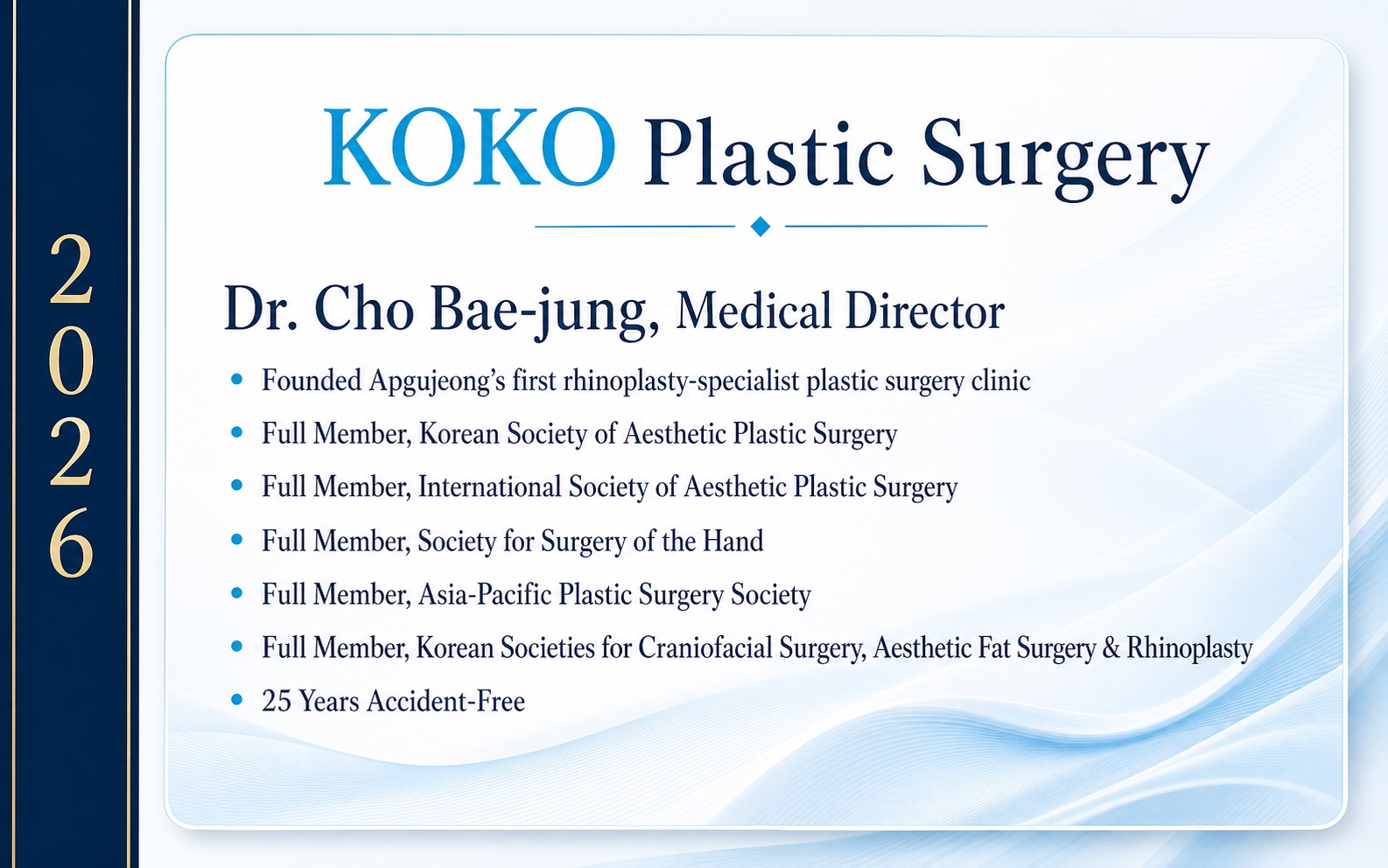
Director Dr. Cho Bae-jung specializes in rhinoplasty and nasal revision surgery and has over 25 years of clinical experience. The same surgeon who conducts the consultation also performs the surgery.
Revision and Reconstructive Rhinoplasty
Some Japanese patients seek correction of previous rhinoplasty performed in Japan or Korea. KOKO Plastic Surgery has experience in septal reconstruction and reconstructive revision surgery using autologous rib cartilage.
Revision suitability is highly individual. The evaluation may include materials used in the previous procedure, time elapsed since surgery, and the current condition of the tissue. In some cases, watchful waiting may be preferable to immediate reoperation.
Services for Overseas Patients
For patients traveling from abroad, the clinic provides post-operative monitoring during the Seoul stay, access to hyperbaric oxygen therapy and other recovery support, and online follow-up after return home.
Before You Commit: Risks and Limitations
Cosmetic surgery is a medical procedure. Even with an experienced surgeon, every operation carries inherent risk. These issues should be discussed directly with your surgeon in relation to your medical history, anatomy, and goals.
- Anesthesia-related risks: These can include allergic reactions, nausea, and, rarely, more serious complications.
- Infection and inflammation: Additional treatment may be needed if infection develops after surgery.
- Swelling, bruising, and edema: Their degree and duration vary considerably between individuals.
- Asymmetry: Minor asymmetry may remain after surgery, and perfect bilateral symmetry cannot be guaranteed.
- Implant and graft response: The body’s response to silicone implants or cartilage grafts differs from person to person.
- Possibility of revision: Future correction may become necessary depending on the healing process.
- Access to care after returning home: Returning to an overseas clinic may not be straightforward if a problem develops in Japan.
Only a physician who has examined you in person can properly determine whether a procedure is appropriate for you.
Frequently Asked Questions
Can the surgical plan be finalized through online consultation alone before I travel?
Online consultation is useful for sharing your goals, medical background, surgical history, and concerns before arrival. However, the final plan can only be determined after a direct in-person examination. At KOKO Plastic Surgery, Director Dr. Cho Bae-jung personally examines each patient before confirming the plan.
Is Japanese-language support available throughout my visit?
KOKO Plastic Surgery has Japanese-speaking staff and provides Japanese-language communication from the initial inquiry through surgery day and post-operative care. Staff availability may vary by period, so it is advisable to confirm the current situation via LINE before travel. Japanese-language support also remains available for follow-up after returning home.
When can I resume wearing makeup or exercising after rhinoplasty?
The timeline depends on the procedure and your individual healing. As a general guide, makeup around the nose is typically avoided for several weeks after suture removal, while activities involving exertion or impact may be restricted for a month or more. Follow the specific instructions provided by your surgeon rather than relying on a general timeline.
What should I do if I develop a problem after returning to Japan?
KOKO Plastic Surgery offers ongoing follow-up via LINE for questions and progress updates after you return home. If you experience fever, significantly worsening pain, discharge, signs of infection, or other concerning symptoms, seek in-person medical attention at a clinic or hospital in Japan as a priority. Contact the clinic promptly as well.
I have had rhinoplasty before. Can I be considered for revision surgery?
Revision suitability depends on factors such as the time since the previous procedure, the materials used, and the current condition of the nasal structure and tissue. KOKO Plastic Surgery has experience in revision and reconstructive rhinoplasty, including septal reconstruction and procedures using autologous rib cartilage. Not every case is appropriate for immediate surgery, and watchful waiting may sometimes be recommended after evaluation.
Have questions before you travel? Reach out for a free consultation.
"Is my nose a suitable candidate for surgery?" "How should I plan my itinerary?" "Am I eligible for revision surgery?" — no question is too small. Our Japanese-speaking team at KOKO Plastic Surgery is here to help. Online consultations are available at no charge. Feel free to get in touch before committing to anything.
KOKO Plastic Surgery — W Building 3F, 830 Nonhyeon-ro, Gangnam-gu, Seoul (Apgujeong area)
Book a Free ConsultationThe content of this article is intended to provide general medical information only and does not constitute individual diagnosis or treatment recommendations. Suitability, risks, and recovery outcomes vary between individuals.