


The desire for a higher, more defined nose is one of the most common concerns we hear in aesthetic medicine. There are two main approaches: hyaluronic acid (HA) filler injections, which require only a needle, and rhinoplasty surgery, which reshapes the nose by working directly on its underlying structure. There is no single "better" option. The right choice depends on your current nasal anatomy, the degree of change you are looking for, your lifestyle, and how much risk you are comfortable accepting. This article provides a careful comparison of how each approach works, what it can and cannot achieve, its risks, and the recovery involved — along with the framework KOKO Plastic Surgery in Apgujeong, Seoul uses to guide patients toward the right decision.
Filler delivers visible results on the same day, but the effects are temporary. Surgery requires a recovery period, but the shape it creates is maintained over the long term.
Filler is limited in what it can accomplish. It is well suited for subtle refinement of the nasal bridge, but it cannot alter the shape of the nasal tip or reposition cartilage.
Both are medical procedures, and each carries its own specific risks. Reducing the conversation to "surgery is risky, injections are safe" is an oversimplification — it is important to understand the distinct risk profile of each approach.
Hyaluronic Acid Nose Filler: How It Works
Hyaluronic acid is a naturally occurring polysaccharide found in the body. When injected into the nasal bridge or root, it adds physical volume to the area. No operating room or general anesthesia is required — the treatment is performed as an outpatient procedure and is completed in a short time.
What changes can you expect?
The primary application is augmenting the nasal bridge and root — adding a modest degree of height to a flat-looking nose or making minor depressions less noticeable. However, filler cannot change the shape of the nasal tip, reduce nostril width, correct the position of the columella, or address a deviated septum.
How long does it last?
Hyaluronic acid is gradually broken down and absorbed by the body over time. How long the results last depends on the product used, the amount injected, the injection site, and individual metabolism. As a general guide, effects typically last between six months and a year and a half, though this varies considerably from person to person. Maintaining results requires periodic repeat injections.
Key risks to be aware of
The perception that filler is safe simply because it is "non-surgical" is not accurate. The nose has a dense network of blood vessels, and injecting into the wrong location — or accidentally into a vessel — can compromise blood flow to surrounding tissue. International medical literature has linked such events to serious complications including visual impairment and skin necrosis. The outcome is directly tied to the injector's anatomical knowledge and clinical experience, which makes the choice of provider critically important. Other potential risks include bruising, infection, uneven results, and visibility of the filler beneath the skin.
Filler can be a reasonable option when you want to explore a small change without committing to surgery. That said, repeated injections over time can stretch and thin the skin of the nasal dorsum, which can meaningfully increase the complexity of any future surgical procedure. If surgery is something you may consider down the road, it is worth consulting a specialist before accumulating multiple rounds of filler.
Surgical Rhinoplasty: How It Works
Surgical rhinoplasty directly accesses the internal structure of the nose — either through incisions placed entirely inside the nostrils (closed approach) or with a small additional incision on the columella (open approach) — and reshapes it from within. The specific technique, materials, and areas addressed vary depending on the goals of each patient.
Techniques and materials
To raise the nasal dorsum, surgeons may use a silicone implant or the patient's own tissue — cartilage harvested from the ear, nasal septum, or rib. Reshaping the nasal tip involves suturing, grafting, or repositioning cartilage. KOKO Plastic Surgery specializes in reconstructive rhinoplasty using the patient's own rib cartilage, building natural support structures without relying on synthetic implants.
The range of changes surgery can achieve
Surgery can address the entire nose — the bridge, the tip, the columella angle, nostril width, nasal deviation, and septal correction — allowing multidimensional changes that filler simply cannot provide. Multiple elements can be refined in a single procedure, which is one of the most significant advantages of surgical rhinoplasty.
Recovery and individual variation
After surgery, swelling, bruising, and nasal congestion are expected. A nasal splint is typically worn for about one week. The timeline for returning to normal activities varies by procedure and the individual's healing, but most visible swelling resolves within two to four weeks, with the final result settling over three to six months or longer. KOKO Plastic Surgery offers a postoperative care program that includes hyperbaric oxygen therapy to support recovery.
Surgical risks
Potential risks include infection, hematoma, effects on sensation, implant migration or infection, skin thinning, implant exposure, and the possibility of revision surgery. When the patient's own cartilage is used, there is also the consideration of scarring and temporary discomfort at the donor site. Surgical outcomes vary between individuals, and thorough preoperative assessment and open communication with your surgeon are essential.
Filler vs. Rhinoplasty Surgery: A Side-by-Side Comparison
| Category | Hyaluronic Acid Filler | Surgical Rhinoplasty |
|---|---|---|
| Approximate procedure time | 15–30 minutes | 1–3 hours (varies by technique) |
| Anesthesia | Local or topical anesthesia | IV sedation or general anesthesia |
| Downtime | Minimal (mild swelling for a few days) | Approximately 1–4 weeks (varies significantly) |
| Duration of results | Approximately 6 months to 1.5 years (individual variation) | Long-lasting (depends on material and technique) |
| Scope of change | Mild augmentation of the nasal bridge and root only | Comprehensive three-dimensional reshaping of the nose |
| Nasal tip refinement | Not possible | Possible |
| Reversibility and revision | Dissolvable with hyaluronidase | Revision requires additional surgery |
| Vascular occlusion risk | Present (the nose requires particular caution) | Different risk profile depending on technique |
| Need for repeat treatment | Yes — periodic repeat injections required | Generally not needed (revision surgery is a separate matter) |
| Long-term cumulative cost | Increases with each repeat treatment | Higher upfront cost, but typically a one-time expense |
This comparison reflects general tendencies. Actual indications, costs, and risks depend on each individual's nasal anatomy, goals, and health status.
How to Decide: A Practical Framework
The following steps can help you think through which approach may be more appropriate for you. Keep in mind that this is a framework for reflection, not a substitute for an in-person consultation with a specialist — that remains the essential final step.
-
Clarify what you actually want to change
If you are looking for a modest increase in bridge height, filler may be worth exploring. If you also want to refine the nasal tip, address a bulbous nose, or improve the overall balance of the nose, surgery is more likely the appropriate path.
-
Be honest about your schedule and downtime tolerance
Whether you can set aside one to four weeks for recovery is a real and practical consideration, depending on your work, school, or social commitments. If extended downtime is not possible right now, a temporary filler treatment may be a pragmatic interim choice. That said, if surgery is something you are likely to want eventually, it is better not to accumulate too many rounds of filler in the meantime.
-
Think about long-term cost and commitment
Filler requires repeat treatments as the effects wear off. Weighing the ongoing cost and frequency of those appointments against the upfront investment of surgery — and its one-time recovery — can help clarify which makes more sense for your situation.
-
Have a specialist assess your nose in person
Skin thickness, cartilage strength, the condition of the septum, and your prior treatment history are not things that can be evaluated from photographs alone. Repeated filler injections can stretch and thin the skin over time, which may affect the technical difficulty of surgery and the materials that can safely be used. The information a specialist gathers during an in-person examination is central to making the right decision.
-
Share your aesthetic vision with your surgeon
Questions like "Will it look natural?" and "Will it suit my face?" involve a degree of personal perception. Describing the overall look and impression you are aiming for during your consultation — and genuinely hearing your surgeon's perspective — is what leads to the best outcomes.
Why KOKO Plastic Surgery Prioritizes Autologous Tissue
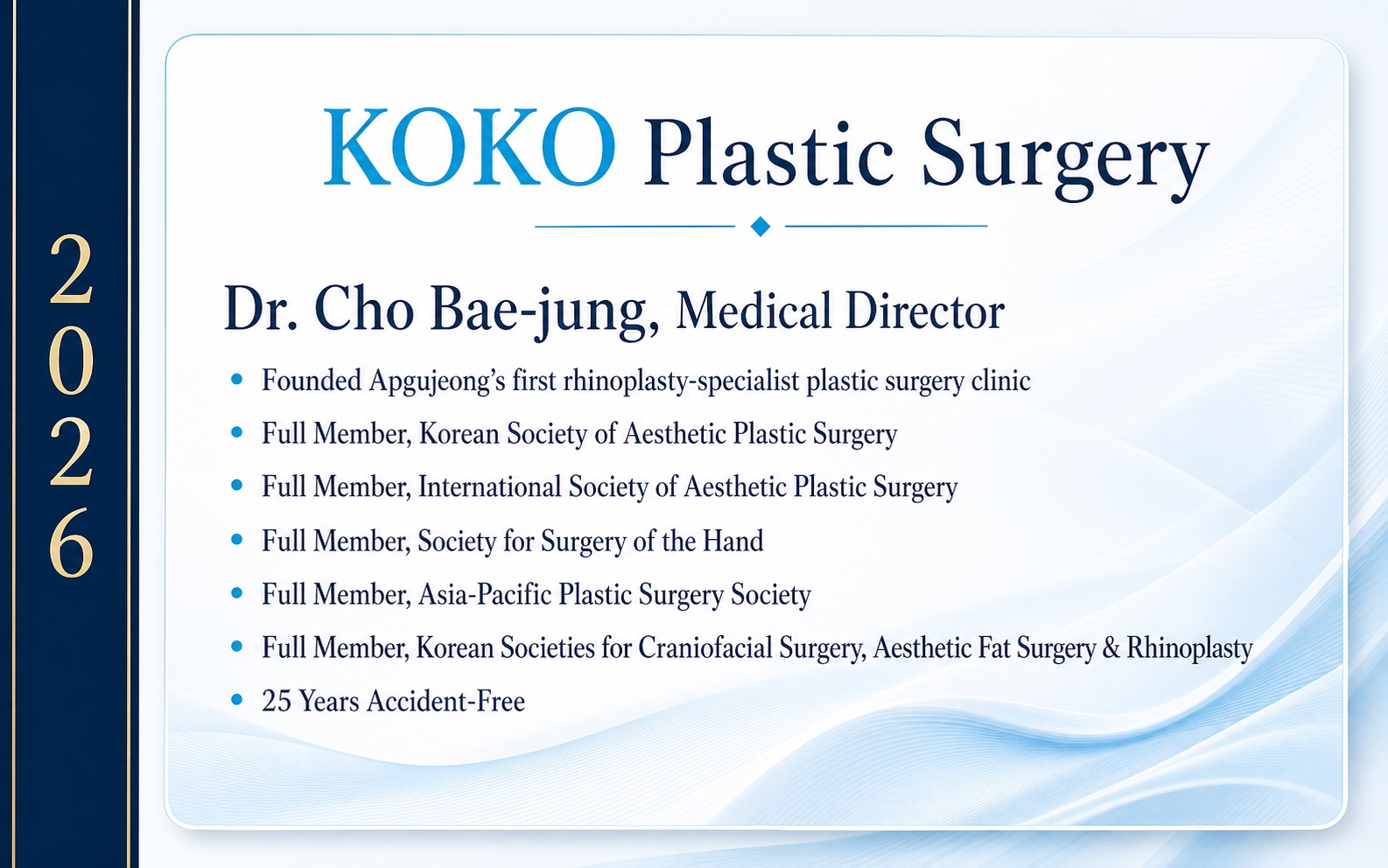
Dr. Bae-Jeong Jo, the founder and lead surgeon of KOKO Plastic Surgery, has dedicated more than 25 years to rhinoplasty and revision rhinoplasty. In recent years, his approach has increasingly centered on reconstructive techniques using the patient's own rib or septal cartilage, minimizing reliance on synthetic implants. This philosophy is rooted in a considered medical perspective on long-term safety and natural-looking results.
Silicone implants are a stable material, but prolonged placement has been associated with progressive skin thinning and the possibility of implant migration over time. Autologous tissue carries a much lower risk of foreign body reaction and, once integrated, becomes a stable part of the body — though it does come with the added consideration of a donor site. The question is not which approach is universally "correct," but rather which material and technique best suit each patient's specific anatomy, goals, and risk tolerance, in order to achieve outcomes that hold up well over the long term.
KOKO Plastic Surgery also sees a significant volume of revision rhinoplasty cases. Many patients arrive after repeated filler treatments, or following complications from surgery performed elsewhere. When the nasal support structure has been damaged, or when the skin has been altered by prior materials, the complexity of revision increases substantially. What we see every day in the clinic reinforces a clear message: the decisions made at the very first treatment or procedure have a profound effect on what options remain available in the future.
Frequently Asked Questions
Can I still have surgery after repeated filler injections?
In most cases, yes — but repeated injections can stretch and thin the overlying skin, and residual filler dispersed through the tissue may affect how the surgery is planned and how technically demanding it becomes. Please share your full treatment history during your consultation. After examining your nose in person, we can recommend the most appropriate technique and materials for your situation.
How long does it take for results to fully settle after rhinoplasty?
Most of the obvious swelling subsides within two to four weeks, but residual swelling and firmness can persist beyond that. The final result typically takes three to six months or longer to fully stabilize. Procedures involving autologous cartilage at the nasal tip can take particularly variable amounts of time for the cartilage to fully integrate and for the shape to settle. Recovery pace depends on individual constitution, the technique used, and postoperative care.
Will the scar at the rib cartilage donor site be noticeable?
Rib cartilage is harvested through a short incision, usually made along the lower chest. The resulting scar is generally positioned in an area covered by undergarments or a swimsuit, and with proper care it becomes much less noticeable over time. Some temporary discomfort or sensitivity at the donor site is common, but this typically resolves within a few weeks to a few months. How visible the scar ultimately becomes varies with individual skin characteristics.
If traveling to Korea is difficult right now, can I have a consultation online first?
Yes, we offer online consultations via WhatsApp. If you share photos of your nose, we can give you a general sense of the direction that might be appropriate and whether an in-person visit is necessary. Please keep in mind that an accurate diagnosis and a definitive surgical plan always require an in-person examination. We welcome you to reach out online as a first step.
Is it ever appropriate to add filler after rhinoplasty surgery?
Adding filler after surgery is not a common practice and requires careful judgment. Introducing injectable material around structures created surgically can affect the condition of the surrounding tissue and local blood flow. If you notice something you are concerned about after surgery, please consult your surgeon before pursuing any additional injections on your own.

Free Online Consultation at KOKO Plastic Surgery
Deciding whether filler or surgical rhinoplasty is right for you is not easy to do on your own. Our role is to look at your nasal anatomy, your goals, and your lifestyle as a whole, and help you identify the option that genuinely makes sense for you. At KOKO Plastic Surgery, Dr. Bae-Jeong Jo personally oversees the entire process — from the initial consultation through diagnosis — and takes the time to explain everything clearly. Please feel free to reach out to us anytime. We are happy to assist you in English and Japanese.
KOKO Plastic Surgery | 3F, Building W, 830 Nonhyeon-ro, Gangnam-gu, Seoul, South Korea