


What Is the Lower Eyelid Lowering Procedure (Glamorous Line Surgery)?
The lower eyelid lowering procedure—known in Korea as "Glamorous Line Surgery (그라마러스 라인 성형)"—moves the outer margin of the lower eyelid slightly downward and outward, increasing the vertical height of the eye while creating a softer, more approachable expression. Because the procedure works on approximately the outer one-third of the lower eyelid, it is popular among those who feel their eyes appear upturned or small, and it is frequently combined with lateral canthoplasty or double eyelid surgery. This article is intended for general informational purposes only and does not guarantee any specific diagnosis or treatment outcome. Please consult a qualified specialist in person or via online consultation to determine whether this procedure is right for you.
People who feel their outer corners are too high, their eyes look small, or their expression comes across as severe or intense
Repositioning the outer lower eyelid margin to increase vertical eye height and soften the overall impression simultaneously
Bone structure, degree of skin laxity, and orbicularis oculi muscle condition all significantly influence both the design and the recovery process
Surgical Techniques and How to Choose Between Them
Lower eyelid lowering surgery is broadly divided into the incisional method and the non-incisional (suture) method. The most suitable approach depends on a comprehensive assessment of lower eyelid skin thickness, conjunctival condition, the degree of change desired, and prior surgical history.
Incisional Method (Conjunctival or Skin Approach)
An incision is made either through the conjunctival side or along the outer skin of the lower eyelid to directly reposition the orbicularis oculi muscle and lateral canthal tendon. This method offers greater change and longer-lasting results, but it is more surgically involved and requires a proportionally longer recovery. A skin-side approach may leave a small scar at the outer corner, and how visible that scar becomes varies from person to person.
Non-Incisional (Suture) Method
A specialized suture is passed through the conjunctival side to anchor the lower eyelid margin in a new position, keeping incisions to a minimum. Recovery tends to be faster and scarring less noticeable, but the degree of change achievable is limited, and results may diminish if the suture loosens over time. This method has specific candidacy requirements; those with thicker skin or who desire a more significant change are often better suited to the incisional approach.
Combined with Lateral Canthoplasty
For patients who also want to widen the horizontal dimension of the eye, combining lateral canthoplasty (outer corner release) with the lower eyelid lowering procedure may be considered. While this allows adjustment of both vertical and horizontal dimensions simultaneously, swelling and recovery time tend to be longer than with either procedure alone. Whether combined surgery is appropriate depends on each individual's periorbital anatomy.
The idea that lower eyelid lowering surgery produces the same result in everyone is not medically accurate. The position of the lower eyelid is heavily influenced by the degree of eyeball projection, the shape of the orbital bony framework, and the amount of excess skin present. A natural-looking outcome and a safe result both depend on the surgeon assessing these structures and determining the appropriate surgical degree accordingly.
Indications and Limitations: What the Surgery Can and Cannot Change
Understanding the realistic scope of lower eyelid lowering surgery is essential to achieving a satisfying outcome. The comparison table below outlines what the procedure can address and where its limits lie.
| Aspect | What surgery can address | Limitations and considerations |
|---|---|---|
| Outer corner angle | Moving the outer lower eyelid margin downward can reduce the upturned angle of the eye | An upturned appearance rooted in bony structure may not be fully corrected without orbital bone surgery |
| Vertical eye height | Lowering the lower eyelid increases scleral (white of the eye) show, making the eye appear taller | There is an anatomical limit to how much lowering is safe; excessive lowering raises the risk of dry eye and ectropion (outward turning of the lower eyelid) |
| Facial impression | The eye area tends to look gentler and more approachable | How much the impression changes varies considerably depending on bone structure, the presence of double eyelids, and eyelid shape |
| Scarring | Incisions can be planned in less conspicuous locations | Individual skin characteristics (e.g., keloid tendency) affect how noticeable scars become |
| Longevity | The incisional method provides relatively long-lasting results | Age-related changes to skin and the orbicularis muscle may cause some gradual change over the long term |
Downtime and Recovery Timeline
Recovery from lower eyelid lowering surgery varies considerably depending on the technique used and individual constitution. The following is a general guideline only; always follow your surgeon's specific instructions for your actual recovery schedule.
- Immediately after surgery to day 3: Swelling and bruising around the eye are at their peak during this period. Cold compresses and rest are important. Contact lens wear should be avoided. With the incisional method, sutures remain in place until removal.
- Days 4 to 7: Suture removal is typically performed during this window for the incisional method (timing varies by clinic). Swelling persists, but many patients are able to go outside during this phase.
- 2 weeks to 1 month: Most swelling has subsided and daily activities largely return to normal. Some redness and firmness along the scar may remain. Check with your surgeon about when it is safe to resume eye makeup.
- 1 to 3 months: The scar gradually becomes less noticeable and the surrounding tissue stabilizes. This period onward is generally the appropriate time to evaluate the outcome.
- 6 months and beyond: The final result takes shape. Patients with thicker skin or particular constitutional traits may take longer to reach full stabilization.
For patients travelling from Japan to Korea for surgery, coordinating suture removal and post-operative check-up appointments with the clinic in advance is especially important. KOKO Plastic Surgery has Japanese-speaking staff, so questions about follow-up care after you return home can be discussed during the consultation.
Risks and Side Effects: What You Should Know Before Surgery
Like all cosmetic surgical procedures, lower eyelid lowering surgery carries certain risks. Understanding these risks clearly before proceeding is the foundation of a safe and satisfying experience.
- Swelling and bruising: These occur for a period after surgery. The severity varies by individual and can be managed with cold compresses, rest, and fluid care.
- Ectropion (outward turning of the lower eyelid): If the lower eyelid is pulled downward too aggressively, the inner surface of the lid may become exposed—a condition called ectropion. Setting the appropriate surgical degree and monitoring recovery carefully are both critical in preventing this.
- Dry eyes and foreign body sensation: Repositioning the lower eyelid can alter the distribution of the tear film, leading to a sensation of dryness or irritation. This is usually temporary, but patients with a history of dry eye should disclose this before surgery.
- Asymmetry: The human face is naturally asymmetrical, and some degree of left-right difference may remain after surgery. Attempting to over-correct asymmetry can introduce other risks, so discussing a natural, realistic range of adjustment with your surgeon is important.
- Scarring and hyperpigmentation: How visible scars become depends on individual skin characteristics. Post-operative care—including sun protection—also influences the final appearance of the scar.
- Possibility of revision surgery: If the outcome does not match expectations, revision surgery may be necessary. Revision procedures tend to be more technically demanding than the original surgery, making careful planning from the outset all the more important.
Accurately disclosing your current ophthalmic health status (including dry eye syndrome, abnormal intraocular pressure, and similar conditions) during pre-operative testing and consultation helps minimize risk.
Key Points When Considering Lower Eyelid Lowering Surgery in Korea
Many Korean plastic surgery clinics have extensive experience with periorbital procedures, and glamorous line surgery is among the most sought-after. Here are the key points to keep in mind when considering travelling from Japan for this procedure.
- Evaluate the quality of the consultation: Choose a surgeon and clinic that explain the technique, expected degree of change, risks, and downtime in concrete terms. An online consultation beforehand is a good opportunity to assess whether your questions are answered thoroughly and honestly.
- Allow sufficient time in your travel schedule: Suture removal for the incisional method typically takes place around five to seven days post-operatively. Planning your stay to include a post-removal check is advisable.
- Confirm follow-up support after returning home: Swelling and wound healing continue after you leave Korea. Check in advance whether the clinic offers photo-based progress reviews or online consultations for patients who have returned home.
- Discuss combination procedures carefully: If you are considering combining lower eyelid lowering with other periorbital surgeries—such as double eyelid surgery, epicanthoplasty, or lateral canthoplasty—discuss the additional risks and extended downtime associated with combined procedures thoroughly with your surgeon.
- Get a clear breakdown of costs: Confirm whether the quoted fee includes anaesthesia, facility charges, and post-operative care. Clarifying upfront whether any additional costs may arise helps prevent misunderstandings. KOKO Plastic Surgery provides detailed cost information during individual consultations.
Frequently Asked Questions
Is there an appropriate age for lower eyelid lowering surgery?
There is no strict age cut-off, but most clinics use 18 years of age—when facial growth has generally stabilized—as a general guideline. That said, patients with significant age-related lower eyelid laxity may require a different design approach than younger patients. Because the right surgical plan depends on periorbital anatomy rather than age alone, it is important to have this assessed individually during a consultation.
Should I choose the non-incisional (suture) method or the incisional method?
The suture method may be suitable for patients who want a smaller degree of change and have thinner lower eyelid skin. The incisional method is more commonly recommended when a greater degree of change is desired, the skin is thicker, or long-term durability is a priority. Which approach is right for you can only be determined once a surgeon has assessed your lower eyelid anatomy directly, so a hands-on consultation is strongly recommended.
When can I wear contact lenses after surgery?
Generally, contact lens wear is permitted once sutures have been removed and both swelling and wound healing have sufficiently stabilized—but the specific timing depends on the technique used and your individual recovery. Because contact lenses can irritate the eye, the rule of thumb is not to wear them until your surgeon has given the go-ahead. It is also worth informing your surgeon in advance about the type of lenses you wear (soft, rigid, coloured, etc.).
Can lower eyelid lowering surgery and lower eyelid fat removal be performed at the same time?
Patients who are bothered by lower eyelid fat (under-eye puffiness) do sometimes request both procedures together. However, combining them can extend the recovery period and increase the burden on the surrounding tissue. Whether simultaneous surgery is appropriate—and which procedure to prioritize—is a decision your surgeon will make after evaluating the specific condition of your lower eyelid.
Can the results be reversed after surgery?
Because the incisional method permanently alters the tissue, returning completely to the original state is generally not possible. Adjustments can be made through revision surgery within a certain range, but revision procedures tend to be technically more challenging than the initial surgery. Thoroughly aligning your expectations and acceptable degree of change with your surgeon before the operation is the best way to make a decision you will be happy with long term.
Consult KOKO Plastic Surgery About Lower Eyelid Lowering Surgery
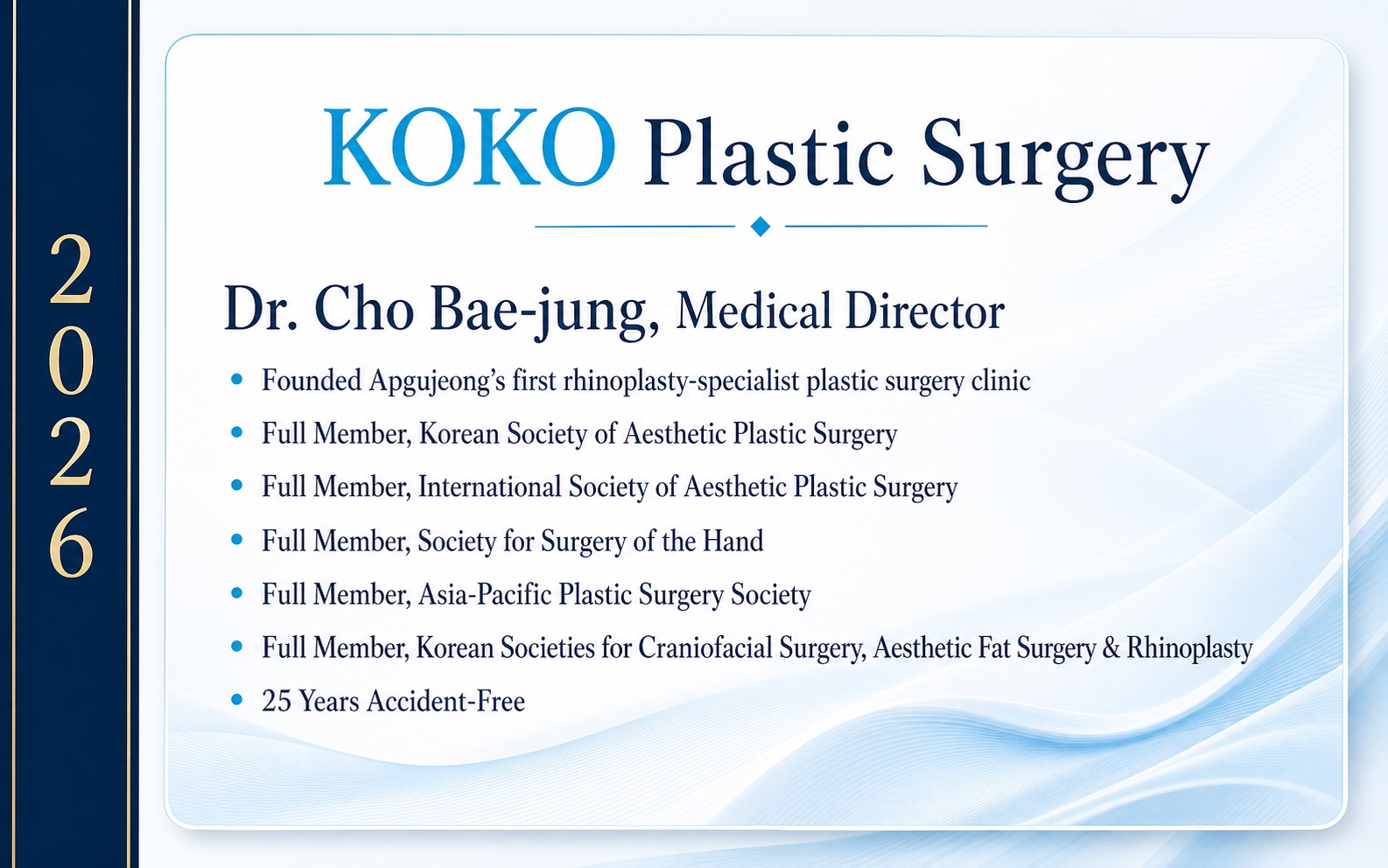
The information provided in this article is for general reference only. The actual indications, surgical plan, cost, and expected recovery timeline will differ depending on your individual periorbital anatomy and overall health. At KOKO Plastic Surgery, Chief Surgeon Dr. Cho Bae-jung personally oversees each patient's journey from initial consultation through to the procedure itself, conducting thorough consultations with a focus on overall facial harmony. Before travelling to our clinic in Apgujeong, Seoul, please feel free to reach out for a no-obligation consultation. Our Japanese-speaking staff are ready to assist you.
Contact Us for a Free ConsultationKOKO Plastic Surgery|3F, W Building, 830 Nonhyeon-ro, Gangnam-gu, Seoul (Apgujeong)