


As we age, the soft fullness of our cheeks fades, the temples hollow out, and shadows beneath the eyes and tear troughs become more pronounced. These changes are driven not only by skin laxity but also by the loss and displacement of facial fat. Facial fat grafting — a procedure in which your own fat is harvested and injected into areas of the face that need volume — has drawn considerable attention, particularly among patients in their forties and fifties, as a way to restore a natural, youthful appearance without the use of foreign materials. This article explains the procedure by injection site, the factors that influence how well the transferred fat survives, and how fat grafting compares with hyaluronic acid fillers.
Because the fat comes from your own body, the risk of allergic or foreign-body reactions is low.
Fat cells that successfully engraft may persist for a long time, though survival rates vary considerably from person to person.
Outcomes, recovery, and risks differ for every patient. A proper assessment cannot be made without an in-person consultation.
What Is Facial Fat Grafting? The Basic Principles
In facial fat grafting, fat is liposuctioned from a donor site — typically the abdomen, thighs, or flanks — then purified through centrifugation or similar methods, and finally injected in small, precise amounts into the target areas of the face using a fine cannula. The transferred fat cells must establish a blood supply from the surrounding tissue — a process called engraftment — in order to survive and provide lasting volume.
Alongside conventional fat grafting, nanofat grafting has gained increasing interest in recent years. This technique processes the fat into an extremely fine emulsion, thought to be rich in stromal vascular fraction and stem cells, which is then introduced into superficial skin layers to address fine lines and uneven skin tone rather than to add volume. The two approaches differ in purpose, depth of injection, and technique, and they are sometimes used in combination. That said, the outcomes and engraftment rates of both methods vary among individuals, and thorough discussion with your surgeon is essential.
The naturalness of fat grafting results depends on the volume injected, the tissue plane targeted, site selection, and how the fat is processed. Overfilling can create unnatural contours and surface irregularities, so careful planning with close attention to overall facial balance is essential.
Injection Sites: Characteristics and Indications
The changes you can expect, the precautions involved, and the course of recovery all differ depending on which areas of the face receive the fat. Below is an overview of the most common treatment sites.
Temples and Forehead
With age, subcutaneous fat in the temples and forehead diminishes, causing a sunken, skeletal appearance. Injecting fat into the temples can restore rounded, youthful facial contours. Fat placement in the forehead is performed to smooth the surface, but because this area has a relatively dense vascular network, the surgeon's technical skill and thorough knowledge of anatomy are especially critical here.
Under-Eye Hollows, Tear Troughs, and Midcheek Grooves
Hollowing beneath the eyes (the tear trough) and midcheek grooves (Malar grooves) are among the most prominent contributors to a tired or aged appearance. Injections in this region require small volumes placed with great precision into very shallow planes — making it one of the most technically demanding areas. Uneven engraftment or imprecise placement can lead to surface irregularities, and revision may sometimes be necessary.
Cheeks and Nasolabial Area
Volume loss in the central cheeks (the malar region) contributes directly to deepening nasolabial folds and downward rotation of the corners of the mouth. Restoring volume here with fat grafting can lend an overall lifting quality to the face, though uneven fat survival may result in asymmetry or surface contour irregularities.
Perioral Region and Marionette Lines
The marionette lines — running from the corners of the mouth down toward the chin — are also amenable to fat grafting. However, this area is subject to constant movement from the muscles of facial expression, and engraftment rates tend to be lower here than at other sites.
Chin and Jawline
A small amount of fat placed at the chin tip can soften or refine the contour of the lower face. This site typically requires minimal volume, and thoughtful design is essential to achieve a balanced result.
Factors That Influence Fat Survival
Fat survival rates stabilize over a period of roughly three to six months after the procedure. It is well understood that a portion of the transferred fat will be reabsorbed; however, the degree of reabsorption varies so greatly among individuals that reliable numerical predictions cannot be made. The following factors are known to play a role.
-
Harvesting and processing technique
The suction pressure used during harvesting, the centrifugation settings, and the care taken to remove impurities all affect how well the fat cells survive. Gentle, low-pressure harvesting and careful handling are considered important for preserving cell viability.
-
Injection technique and tissue plane
Depositing fat in small aliquots across multiple tissue planes allows each group of cells better access to oxygen and nutrients from the surrounding tissue. Injecting a large bolus in a single location tends to leave the center of the graft without adequate blood supply, reducing overall survival.
-
Blood supply at the recipient site
Richer vascularity at the injection site is associated with better engraftment. Areas that have previously undergone surgery or radiation, or that have inherently poor circulation, may support less predictable fat survival.
-
Patient biology, age, and lifestyle
Smoking causes vasoconstriction and may adversely affect fat survival. Significant fluctuations in body weight after the procedure can also alter the volume of the grafted fat.
-
Postoperative care
Pressing firmly on the treated area or raising core body temperature through strenuous exercise in the early postoperative period may impair engraftment. Following your surgeon's instructions regarding rest and cooling of the treated areas is important.
Once the fat has successfully engrafted, it may remain in place for many years, though ongoing age-related changes in facial fat will continue to occur. If the initial result is deemed insufficient, a supplementary injection session can be considered.
Fat Grafting vs. Hyaluronic Acid Fillers: Which Is Right for You?
When the goal is restoring facial volume, hyaluronic acid (HA) fillers are often considered alongside fat grafting. Each option has distinct characteristics and appropriate uses, and neither is categorically superior — the right choice depends on your individual situation and goals.
| Feature | Fat Grafting | Hyaluronic Acid Filler |
|---|---|---|
| Material used | Autologous fat (your own tissue) | Hyaluronic acid (synthetic product) |
| Longevity | May persist long-term once engrafted (significant individual variation) | Approximately 6–18 months (varies by product and site) |
| Downtime | Both harvesting and injection required; swelling and bruising typically last several weeks | Injection only; swelling usually resolves within a few days |
| Reversibility | Once engrafted, revision requires additional injection or liposuction | Can be dissolved with hyaluronidase |
| Foreign-body risk | Low, as autologous tissue is used | Rare risk of product allergy or granuloma formation |
| Vascular occlusion risk | Risk of vascular occlusion during injection requires careful technique | Risk of vascular occlusion during injection requires careful technique |
| Invasiveness of harvesting | Liposuction of a donor site is required | Not applicable |
| Best suited for | Broad volume deficiency; patients who desire long-lasting results | Focal volume correction; first-time patients; those who wish to trial treatment before committing |
It is important to note that inadvertent intravascular injection — which can lead to serious complications such as skin necrosis or visual impairment — is a risk with both procedures, however rare. This makes it essential that treatment be performed by a physician with sound anatomical knowledge and appropriate technical skill. Fat particles are larger than HA gel and require greater injection pressure, meaning that the surgeon's experience and anatomical understanding are especially critical for risk management in fat grafting.
Risks, Recovery, and the Limits of What Fat Grafting Can Address
Although fat grafting uses your own tissue, it is not without risks. Below is a summary of the principal risks and a general guide to recovery that you should discuss with your surgeon.
Swelling and Bruising
Both the injection sites on the face and the fat donor site will experience swelling and bruising. Facial swelling often diminishes substantially within two to three weeks, but complete resolution can take two to three months. Individual variation is considerable.
Uneven Engraftment and Asymmetry
Fat survival rates can differ between areas and between the two sides of the face, leading to asymmetry or irregular contours. Supplementary injections may correct these issues, but a period of observation of approximately six months is needed for the result to stabilize before any revision is considered.
Infection and Cyst Formation
Infection at the injection site or the development of fat necrosis cysts are uncommon but recognized complications. Persistent discomfort, firmness, or fever after the procedure warrants prompt medical attention.
Vascular Occlusion
If fat is inadvertently injected into a blood vessel, it can cause serious complications including skin necrosis and vision loss. This is exceedingly rare, but the risk cannot be entirely eliminated.
Volume Changes with Weight Fluctuation
Because the engrafted fat consists of living cells, significant weight gain or loss after the procedure can alter the volume achieved. Maintaining a stable weight helps preserve the result.
Donor-Site Changes
The area from which fat is harvested — typically the abdomen or thighs — may show temporary bruising or minor contour irregularities. These generally improve over time, though the degree varies among individuals.
Fat grafting also has its limitations. If skin laxity is the primary concern, a lifting procedure may need to be considered alongside or instead of fat grafting. Very extensive volume loss may require more than one treatment session. Because the most appropriate treatment plan can only be determined through a physical examination, consultation with a specialist is indispensable.
Facial Fat Grafting at KOKO Plastic Surgery: From Consultation to Procedure
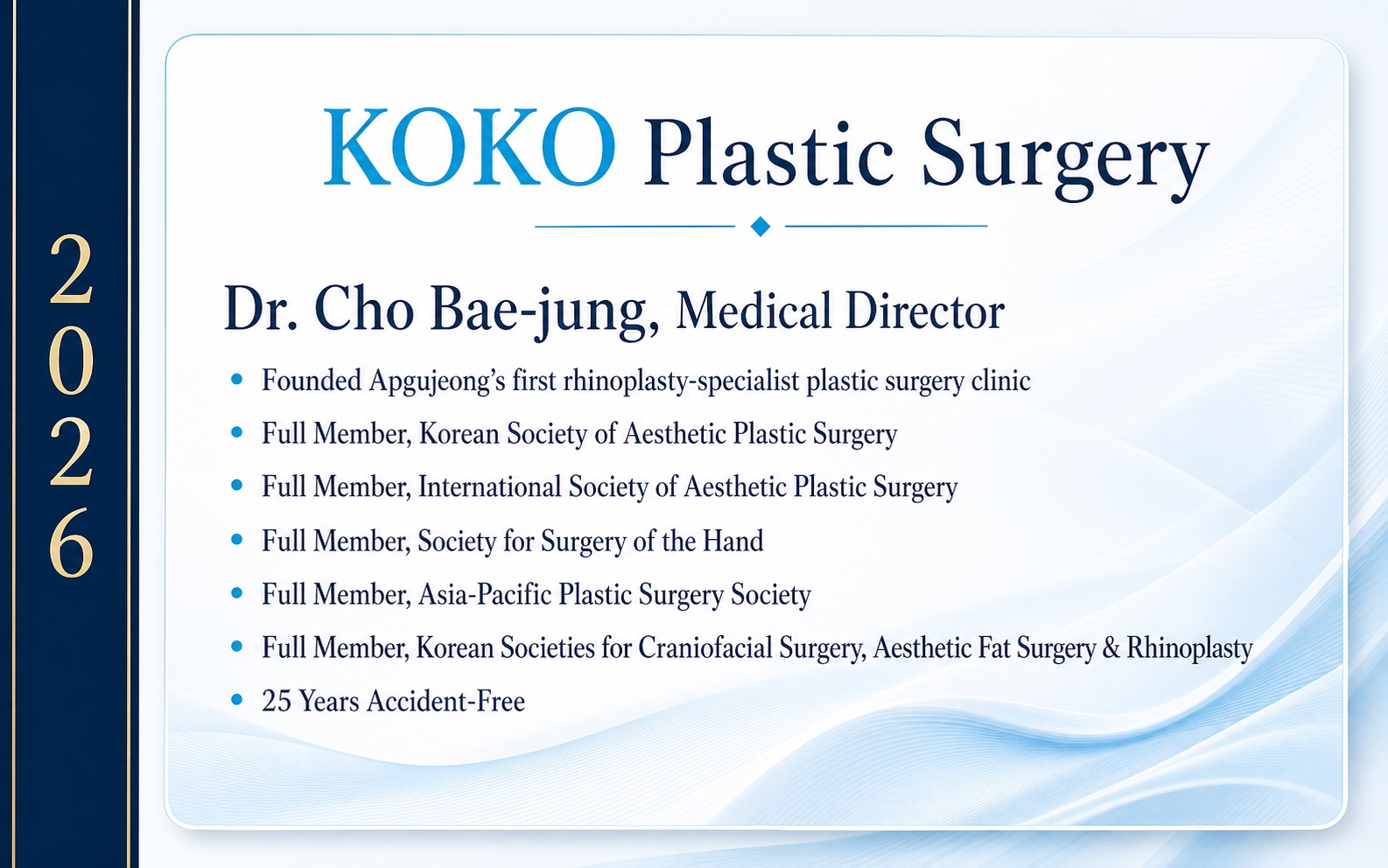
At KOKO Plastic Surgery, Dr. Cho Bae-jeong, the clinic's director, is personally involved in every step — from the initial consultation through to the procedure itself. After a thorough assessment of your overall facial balance, Dr. Cho will explain clearly whether fat grafting is appropriate for you and whether combining it with other treatments would be beneficial.
-
Initial consultation and examination
Your face is examined directly to assess the degree and location of volume loss, skin condition, and your goals for treatment. Suitable donor sites for fat harvesting are also identified at this stage.
-
Treatment planning
A detailed plan is presented, covering the injection sites, volumes, and processing method. Alternative options such as HA fillers are discussed in comparison, and a final approach is agreed upon only once you are fully informed and comfortable with the plan.
-
Pre-procedure preparation
Blood tests are performed and your current medications and smoking status are reviewed. Instructions regarding the discontinuation of anticoagulants and certain supplements will be provided.
-
Harvesting and injection
The procedure is carried out under local or intravenous sedation anesthesia. Fat is harvested, purified, and injected. The total procedure time depends on the number of sites treated and the volumes involved.
-
Postoperative care and follow-up
Swelling is monitored and the donor site is cared for during recovery. Where appropriate, adjunctive therapies such as hyperbaric oxygen treatment are available to support healing. A follow-up appointment several months later is recommended to assess how well the fat has engrafted.
Frequently Asked Questions
How long do the results of fat grafting last?
Fat cells that successfully engraft may remain in place for many years, but survival rates vary among individuals, and the volume may change over time with weight fluctuations or natural aging. Results generally stabilize three to six months after the procedure, at which point a decision about any supplementary injections can be made. Please ask your surgeon for a more specific estimate based on your individual circumstances at the time of your consultation.
Can fat grafting be performed in areas where I have previously had hyaluronic acid filler?
Residual HA filler in the tissue may affect both fat survival and the final appearance of the result. In some cases, it is advisable to dissolve the filler with hyaluronidase and allow sufficient time to pass before proceeding with fat grafting. It is important to give your surgeon a complete and accurate history of any previous treatments during your consultation.
What happens if the fat does not survive?
Fat that does not engraft is reabsorbed by the body, meaning the expected volume enhancement may not be fully achieved. If engraftment is judged to be insufficient, a supplementary injection session can be considered six or more months after the initial procedure. Minor surface irregularities from uneven survival may also occur; the appropriate approach to any revision will depend on the specific findings and should be discussed with your surgeon.
What is the difference between nanofat grafting and conventional fat grafting?
Conventional fat grafting is primarily intended to restore volume, whereas nanofat grafting processes the fat into a much finer form and focuses on improving skin quality — addressing superficial fine lines and dullness rather than adding bulk. The two techniques can be used together, but their indications, expected outcomes, and risks are different. Whether one or both approaches are appropriate for you is a decision that requires an in-person assessment.
How much will fat grafting affect my daily life during recovery?
Facial swelling and bruising typically become much less noticeable within one to two weeks, though complete resolution can take two to three months. The donor site will also be temporarily swollen and tender. Strenuous exercise, alcohol, and sauna use are generally advised against for the first several days after the procedure. Please follow the specific postoperative instructions provided by your surgeon, and bear in mind that individual recovery experiences vary.
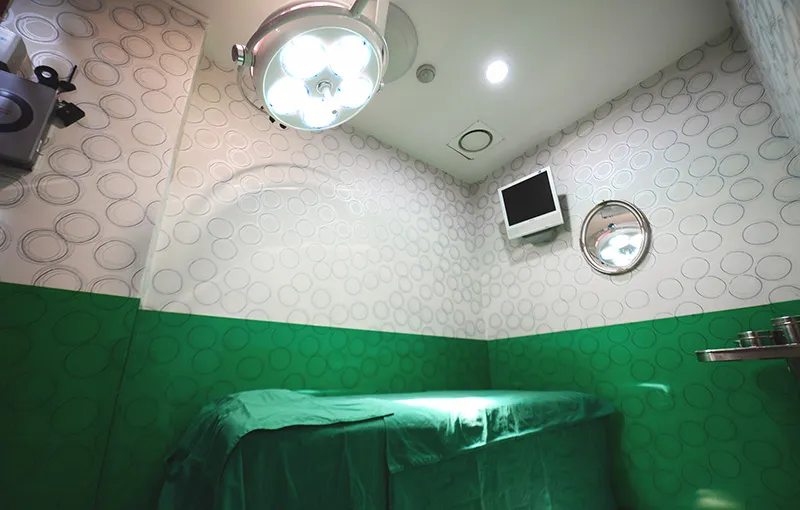
Book a Consultation at KOKO Plastic Surgery
The natural-looking results that facial fat grafting can offer depend on a treatment plan that is thoughtfully tailored to you as an individual. If you are concerned about volume loss in your face, would like to understand how fat grafting differs from HA fillers, or simply want to find out whether fat grafting is a good fit for your particular anatomy and goals, we warmly invite you to book a specialist consultation at KOKO Plastic Surgery. Dr. Cho Bae-jeong will examine your face as a whole and walk you through the most appropriate options for you in clear, thorough detail.
KOKO Plastic Surgery is located in Apgujeong, Seoul, and consultations are available in Japanese. Please feel free to reach out to us via WhatsApp.
Contact us on WhatsAppThe information provided in this article is intended for general educational purposes only and does not constitute a recommendation for any specific diagnosis or treatment. Suitability, costs, and risks vary from person to person. Please consult your physician for advice specific to your situation.