



What is a short chin tip?
A short chin tip refers to when the vertical length of the chin is short but recedes backward. This means the lower jaw is positioned further back, creating a faint boundary between the chin and the neck, which makes it appear as if there is more flesh than there actually is, giving the impression of a protruding mouth. Correction of a short chin tip can transform a face with a blunt and indifferent impression into a balanced and gentle one.
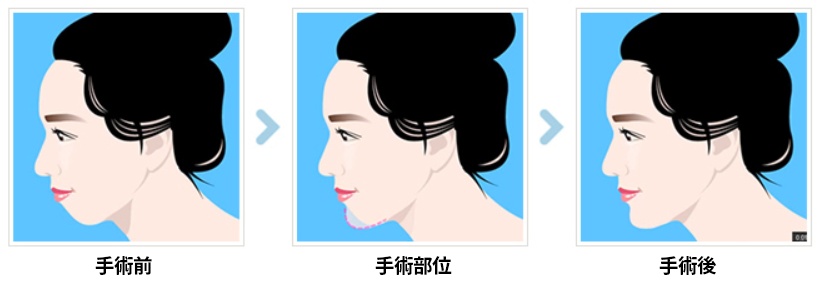
Before and after surgery
KOKO Chin Tip Augmentation POINT
“Based on clinical research and experience, we perform appropriate ‘Chin Augmentation’ on the face, adopting effective and safe surgical methods.”
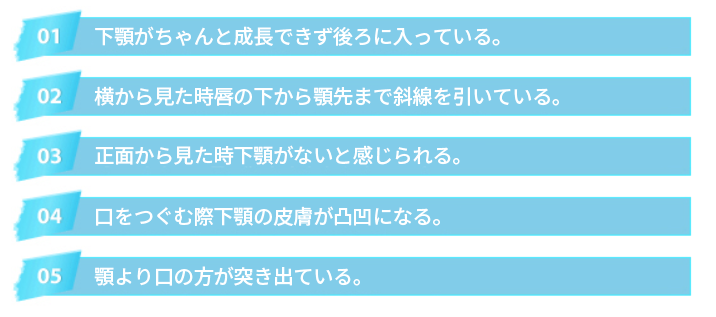
People Who Need Chin Augmentation
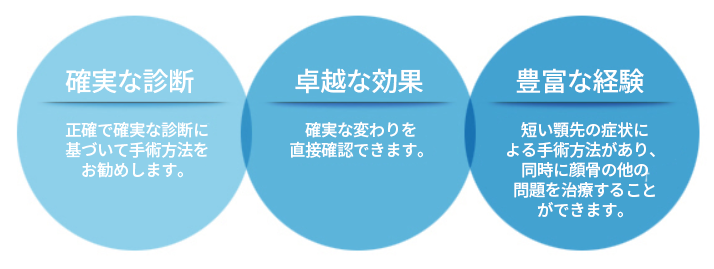
The uniqueness of chin augmentation at KOKO Plastic Surgery
Chin Augmentation Surgery
■ Method of Inserting Implants
[Silicone]
There are two methods for bone cutting performed through intraoral incisions: the sagittal split ramus osteotomy (SSRO) and the intraoral vertical ramus osteotomy (IVRO).
[Gore-Tex]
While the shape is good, there is a possibility of up to 40% reduction in size, so compressing the Gore-Tex during surgery can lead to better results.
[Medpor]
The shape is good, but there may be some discomfort in mouth movement after surgery.
■ Method of Using Autologous Tissue
[Genioplasty]
This is a surgical method where one’s own bone is cut and moved forward or downward. There are few side effects, but the surgery can be costly, and there is a risk of double chin if the movement range is extensive. However, since the entire bone is moved, it results in a natural jaw shape, improves the neckline, and relaxes tension in the chin. One drawback is that general anesthesia is required.
[Microfat Transfer Surgery]
This method has gained attention recently, involving the delicate transplantation of fat extracted from areas like the lower abdomen to the area of the short chin over several sessions. While side effects are minimal, there is the inconvenience of needing additional transplantations, usually 1 to 2 times.
■ Mandibular Osteotomy
There are two methods of bone cutting performed through intraoral incision: the sagittal split ramus osteotomy (SSRO) and the vertical ramus osteotomy (IVRO) of the mandibular ramus.
Postoperative Care Instructions
- Swelling and bruising may occur for about 2 days after surgery, gradually improving over the following 2 weeks.
- Applying ice packs for 2-3 days after surgery is crucial to minimize bleeding, swelling, and bruising. Afterward, using a hot towel to promote blood circulation is recommended.
- Keeping the head elevated for 2 weeks post-surgery can help reduce swelling.
- Avoid alcohol and smoking for 4-5 weeks after surgery to facilitate smooth blood circulation, tissue regeneration, and minimize inflammation and side effects.